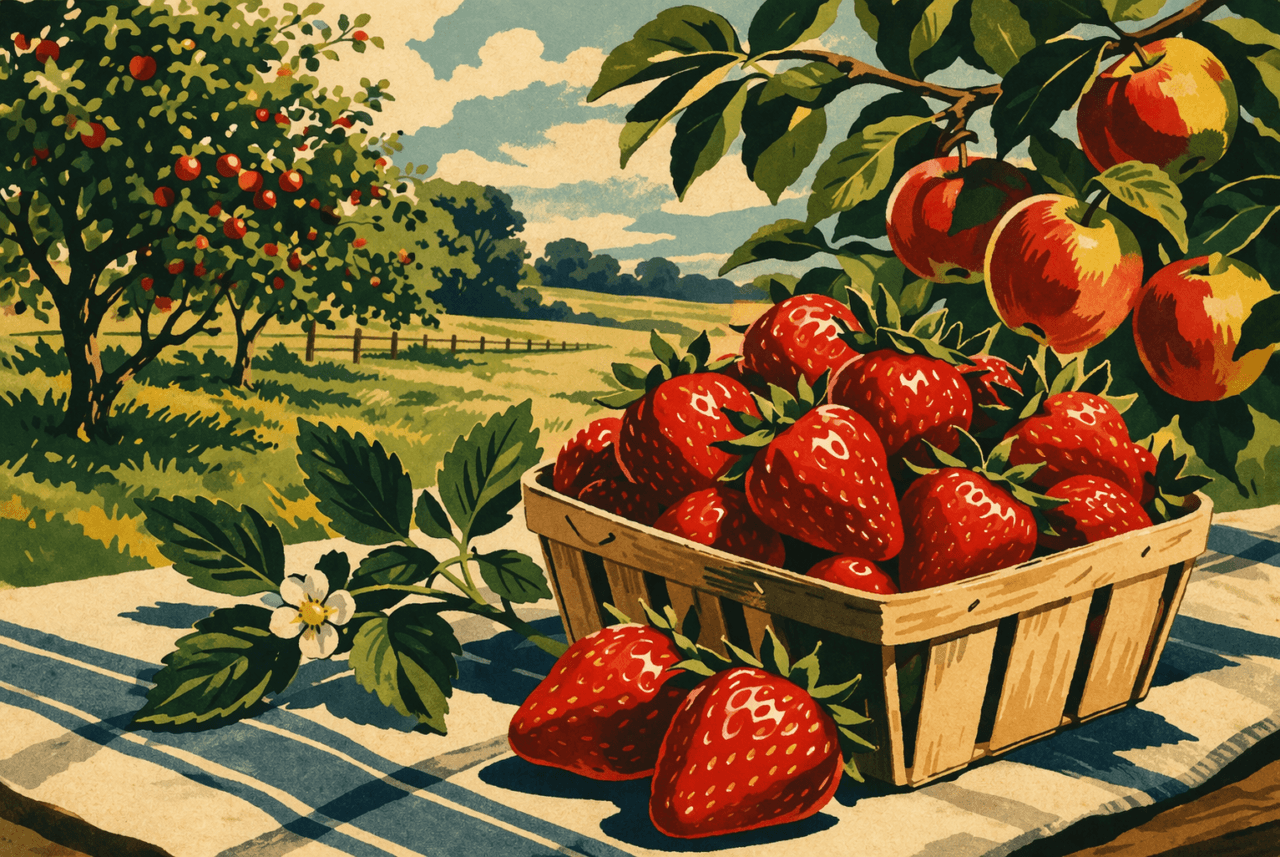
People have more or less forgotten what seasonal food actually is.
I can remember being absurdly excited when the first strawberries of the season appeared. Or going blackberry picking. Or, in a less policy-compliant phase of rural childhood, helping ourselves to apples from the local orchard.
That excitement was real. Seasonal food had anticipation built into it. You waited for it, so it mattered. And because it mattered, it tasted better too. Not just because memory is sentimental and occasionally a liar, but because food picked and eaten in season often is better.
Now, of course, almost everything is available at all times. On one level, that looks like abundance. On the other hand, it has flattened the sense of occasion. If strawberries are permanent, strawberries are no longer news.
And there is a harder point sitting behind that. Britain has built a food system heavily reliant on long, complex supply chains, imported produce, and oil-dependent transport. As a result, consumer expectations are now badly out of sync with what can actually be grown here, seasonally and resiliently.
There is a wider point here for hospitality and foodservice. Seasonality is not a limitation to be apologised for. It is part of the pleasure. It creates rhythm, variety, expectation and, done properly, excitement. It also connects menus more honestly to place, climate, supply chains and food security.
At a time when food resilience matters more than ever, there may be something to be said for rediscovering the value of seasonal produce, not as nostalgia, but as a strategy.
Less year-round sameness. More moments people actually look forward to.
That would be good for the plate, palate, and the business.
Want to rethink your food strategy around seasonality, resilience and sense of place? Let’s talk.