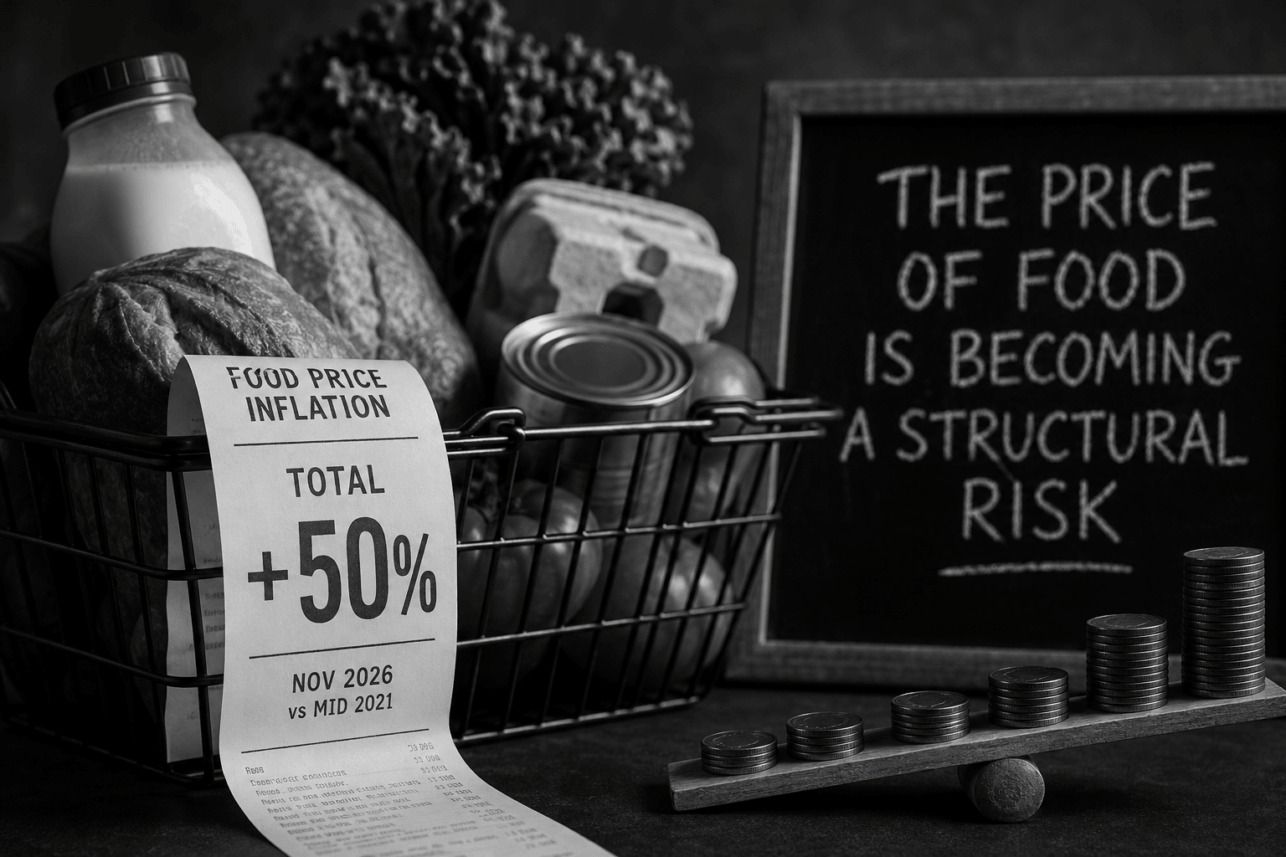
Food prices aren’t just rising. They’re becoming a structural risk.
New analysis from the Energy and Climate Intelligence Unit suggests UK food prices are on track to be 50% higher by November 2026 than they were at the start of the cost-of-living crisis in mid-2021.
That’s not a minor adjustment. It’s nearly 20 years of food price growth compressed into just over 5 years. The problem is wider than our sector, of course. Food is not a lifestyle accessory. Food is life. It is health, energy, welfare, dignity, culture, community and care.
For catering, hospitality, education, workplace dining, visitor attractions and public-sector food provision, that matters profoundly. When the cost of basic food moves sharply, the effects are never confined to the purchasing spreadsheet. They move through households, schools, workplaces, public venues, staff restaurants, visitor cafés and contract negotiations.
Food prices are not just an operational pressure. They’re a social pressure.
History’s full of warnings about what happens when food affordability becomes unstable. We’re not at that point, of course. But the direction of travel is clear enough to deserve attention now.
The risk is that organisations respond cosmetically: a cheaper supplier here, a smaller portion there, a little menu shuffle, perhaps the catering equivalent of putting a hat on a volcano. It may look composed for a moment. It doesn’t change what’s happening underneath. The better response is strategic.
This means understanding the whole food system: procurement, menu design, labour, waste, equipment, energy, logistics, pricing, nutrition, customer expectations and contract structure. Food inflation exposes weak systems. It also rewards organisations prepared to think properly before the pressure becomes acute.
At MYA, we help clients move beyond short-term fixes and build catering strategies that protect value, quality and trust.
Because when food costs rise, the question is not simply “how do we spend less?”
It is: how do we keep the system credible?